"Michael" Film Review: The Long-Awaited Michael Jackson Biopic Is Too Hollow To Be Compelling
I had no desire to see "Michael," but I have plenty of thoughts now that I have.

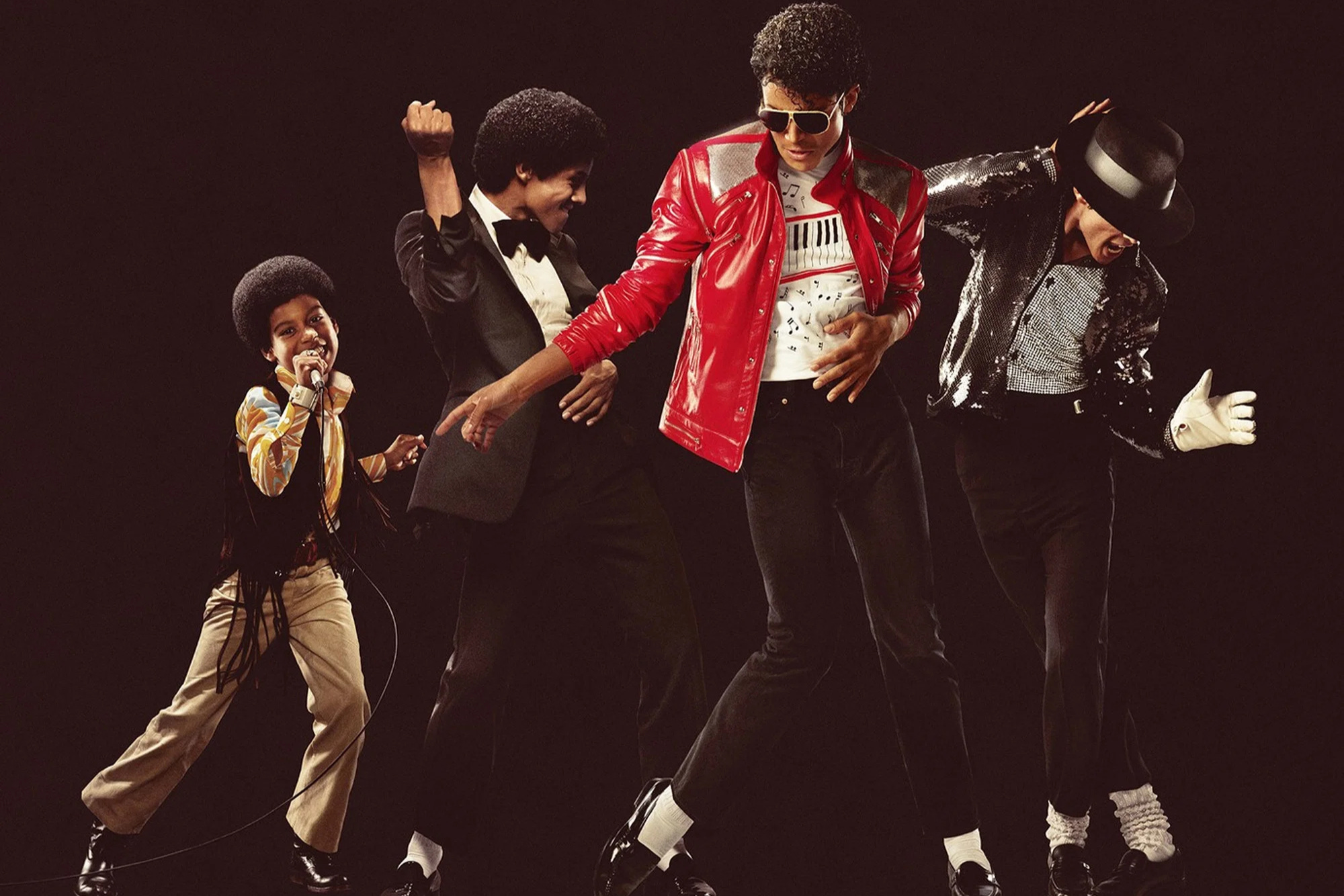
There’s not much more that can be said about Michael Jackson that hasn’t been repeated millions of times over the last six decades. He was the most popular entertainer who ever lived, with records and status that every big name since him has been desperately trying to chase. He also lived one of the most tumultuous lives of any entertainer who ever lived, with an infamously brutal upbringing and his life from the age of 35 to the day he died being marred with allegations of sexual misconduct from multiple young boys. Allegations that turned a global superstar into a pariah and have sullied his reputation in the eyes of more than a few people.
So when Michael, the biopic about Jackson, first got announced, I was skeptical. Jackson’s story can’t be told in two hours, and there are large sections of it that I am not sure could ever be mentioned. The latter has already been proven correct, as the film’s third act underwent reshoots in June 2025 following the discovery of a clause in the settlement between Jackson and Jordan Chandler, who levied the first set of allegations against the musician in 1993. The clause barred Chandler from being portrayed in any future films.
As such, the ending of Michael, which originally introduced that chapter of his life in what I imagine would have been a cliffhanger to draw people back for the sequel (which has been greenlit and probably won’t be released until around 2028), instead comes in 1988, during a show at Wembley Stadium on the Bad World Tour, Jackson’s first as a headlining act. It’s a fine ending, though including a full performance of “Bad” felt like a bid to draw out the length of the film while simultaneously feeling tacked on.
After leaving the theater, my brain immediately likened the film to a high-budget Wikipedia article. Simply put, there are no revelations or grand statements. Though it often looks nice (ignoring some truly awful CGI, which was used for the crowds and Bubbles the chimpanzee), and it was enjoyable to hear nearly a dozen of the greatest songs ever recorded, Michael is a largely empty film that serves almost no other purpose but to get fans to dance in their seats.
That’s not to say it’s all bad. Juliano Krue Valdi as young Michael Jackson captured the spirit of his Motown days and was immensely charming every time he appeared on screen. That was most apparent in the scenes with Motown founder Berry Gordy (played by Larenz Tate), who’s depicted as a father figure towards Jackson and even showed him some of the basics of music production as a child. Gordy calls Jackson one of the most talented vocalists he’s ever heard after hearing his cover of The Miracles’ “Who’s Lovin’ You.” He also puts Joseph in his place, telling him to focus on being a manager so that Gordy and the Jackson 5 can focus on creating the music.
Speaking of Joseph, Colman Domingo embodied everything the public’s ever heard about the man. The abusive perfectionism in the group’s infancy and the refusal to allow his son to completely spread his wings as a solo artist until Michael himself took agency over his own life and fired him. We also see how Joseph’s words affected his son, as he called young Michael “big nose” in what was meant to feel like a throwaway line, but he took it to heart and got cosmetic surgery at the first opportunity.
There’s also the meeting between Joseph and Don King ahead of the Victory World Tour, where he tells King that Michael won’t miss the tour. He ultimately attempts to guilt trip Michael into doing the tour, and when his son’s hair catches fire during the filming of the infamous Pepsi commercial, the first thing he asks the doctor is if Michael will ever perform again. Michael himself comes to the conclusion to do the tour after meeting children in the burn unit, and he realizes that life is too short. Domingo is one of the greatest actors of this era, and he did a tremendous job of bringing Joseph to the big screen, even if some of his actions felt he was reduced to a comic book-like “Big Bad” for Michael to overcome.
Joseph’s actions are also used as the explanation for Jackson’s eccentricities, like starting a zoo in his backyard or the hyperfixation on Peter Pan, a story that is, in part, about the refusal to grow up, all of which are important to Jackson’s adult life and downfall.
Of course, I would be remiss if I neglected to mention Jaafar Jackson’s performance. From the moment he appears on screen, he is Michael Jackson. When they announced that a family member was playing him, my worry was that he only got the role because he looks like him to an almost uncanny degree. I was glad to be wrong. It was clear that he studied everything he could about his uncle, nailing his mannerisms and voice, as well as emulating his stage presence in a way that impersonators can only dream of. The recreation of Motown 25 in particular would have been pretty incredible had it not come with an egregious amount of camera cuts. However, I couldn’t help but feel as if my time would have been better spent watching Michael’s actual performances on YouTube.
Those three performances (as well as Tate as Gordy, KeiLyn Durrell Jones as security guard/confidant Bill Bray, and the other Jackson brothers in the rare times they actually interact with Michael instead of serving as set dressing) carry the film to not being the worst thing I’ve ever seen.
Disappointingly, Nia Long was not given a lot to do as Katherine Jackson. It’s clear that she hates the way Joseph treats their sons, especially Michael. As Michael grows older, she’s shown as the parent that Michael can actually speak to without judgment. Those scenes are sweet, but it felt as if that’s all she was there to do. Even when she pushed back against Joe, he did not suddenly have a change of heart. Having Long in this role felt like a waste of her talent.
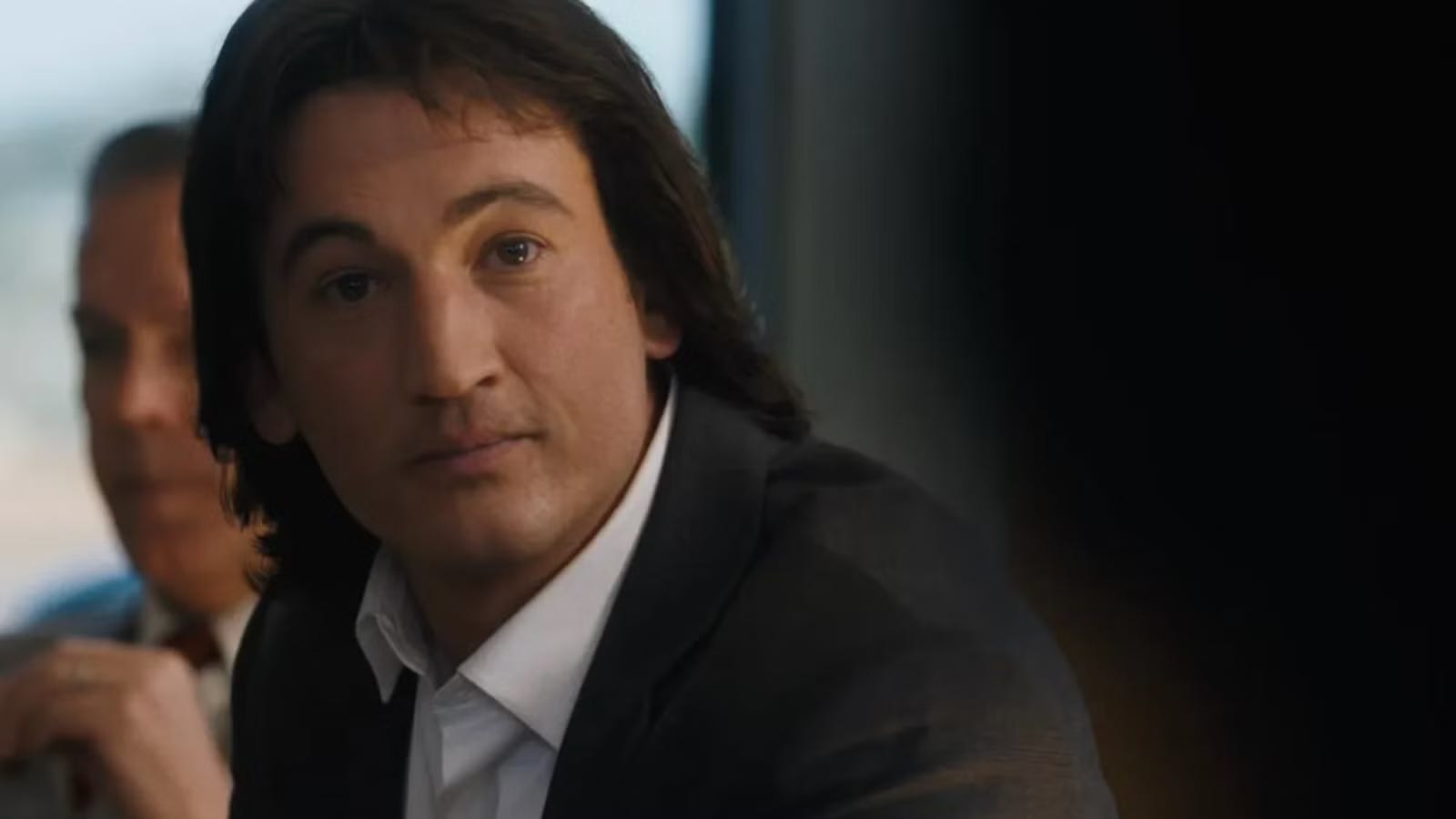
Miles Teller is similarly wooden as John Branca, Jackson’s longtime manager and lawyer. He’s also in this film way too much, probably double (or even triple) the amount of time as Quincy Jones. That is inexplicable to me, even with Branca’s heavy involvement in managing Michael Jackson’s estate since his death. Teller is an excellent actor, but he feels completely out of place here.
Which brings me to my biggest issue with this film. There’s very little tension. Sure, Joseph is remorseless and cold, but Michael seems to navigate it relatively easily. At least, way more easily than he did in real life. When MTV refused to play Jackson’s videos on the network, a single threatening phone call paved the way for that to become a reality. The times we see him in the studio, he’s presented as an infallible machine who can produce all-time great singles in just a few attempts.
Jackson and Quincy Jones also have no disagreements with one another over the music they were making together, even though there was a notable amount of creative tension between the two near the end of their acclaimed run. Near the end of the film, we move from 1984 to 1988, which was a year after Bad was released. Bad marked the last time the pair worked on music together, but there’s nothing that shows viewers how and why their partnership dissolved. And for all of the performances we see, there’s no mention of “Smooth Criminal,” one of the most iconic songs of Jackson’s entire career.
That’s the main reason why attempting to tell Jackson’s story doesn’t really work in this form, unless those involved were committed to making a longer film. Viewers missed out on seeing these moments that were important to Jackson’s career in favor of loading the film down with musical numbers. Some of the things we do see, like Jackson’s plastic surgery or the start of his vitiligo, are not explained in much detail, beyond Joe’s “big nose” comment less than 20 minutes into the film clearly planting the seed for the former. They’re acknowledged as things that happened to him because fans know that they’re things that happened to him, and that is where it ends.
The lack of “big moments” to push the narrative forward is also a direct result of there being a conspicuous lack of Diana Ross and Janet Jackson, both of whom played pivotal roles in Michael’s life and career. It’s going to be a bit ridiculous if the sequel releases without the iconic “Scream” music video getting so much as a passing glance. It would be equally ridiculous if Janet gave them access to her likeness for the sequel and she appeared in the film after not being in this one at all. The musical numbers do still make this film fun to watch at times, but the number of them may be a source of frustration for anyone who hoped this film would do a bit more to explain some things that we’ve never been made aware of or are only partially knowledgeable about.
All in all, Michael is not great. It’s not really even good, either. But it’s also not irredeemably awful. Jaafar Jackson and Colman Domingo’s performances are very strong despite the material (or lack thereof, in some respects) they were given. But once the shine of the detailed musical recreations wears off, we’re left with a film that’s too shallow for someone as complex as Michael Jackson was. Hopefully the sequel can rectify that lack of depth, but with this film in mind, I am not very confident in that being the case.
Rating: 2/5