What Even Is A Coachella Headliner Anymore?
Some quick thoughts on Sabrina Carpenter's Coachella sets and a brief look at the future.

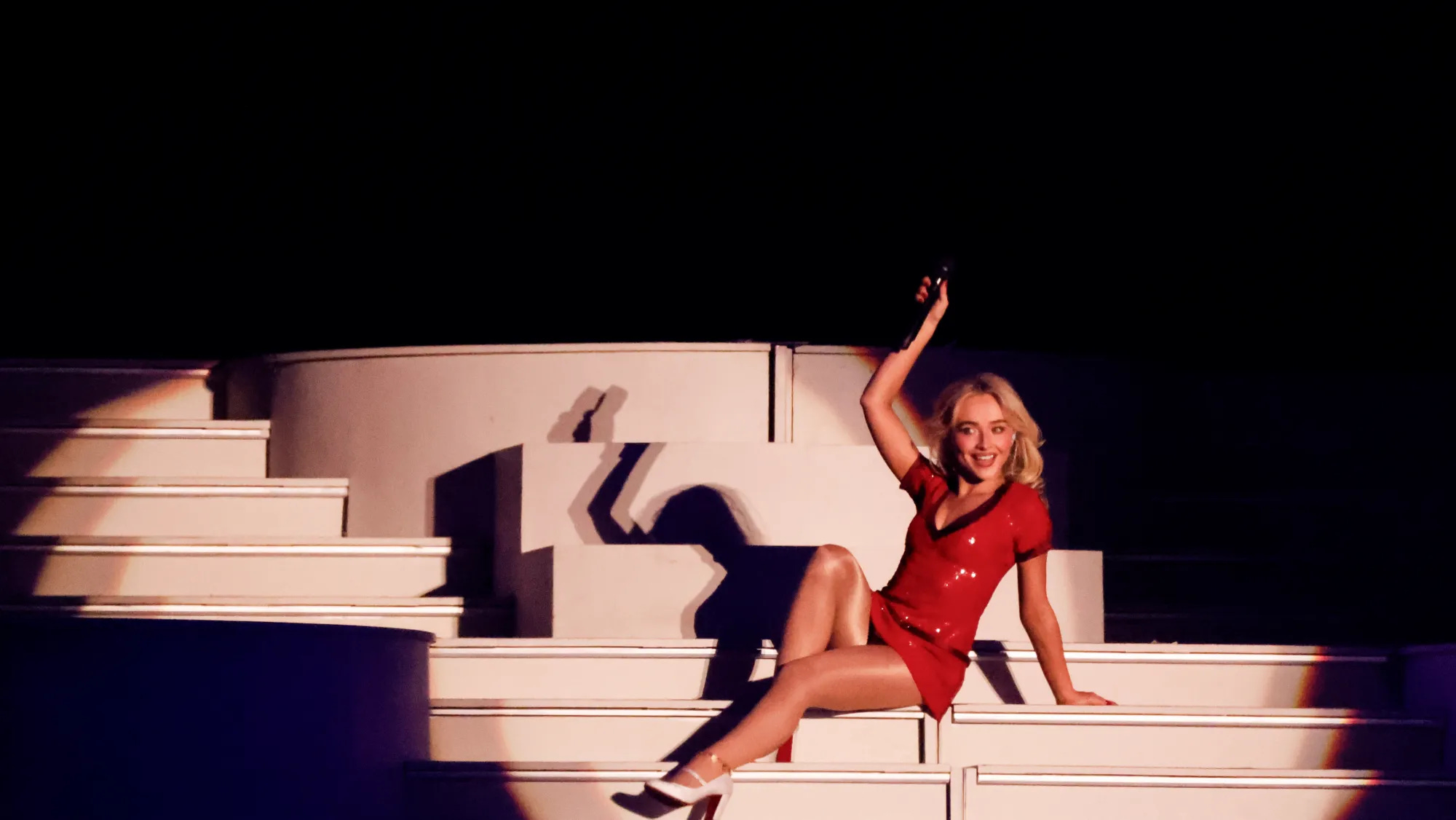
After two star-studded weekends, Coachella came to an end on Sunday evening. Admittedly, I didn’t watch much of the second weekend, save for the surprise Kacey Musgraves appearance, Madonna’s cameo during Sabrina Carpenter’s set, and Manon Bannerman getting her Coachella moment on stage with PinkPantheress instead of alongside Katseye. However, I thought all of what I saw of the first weekend was very strong.
PinkPantheress had the performance of the first weekend, with a colorful and cohesive set that showcased her capabilities as one of the most talented creators (and curators) in music today. Still, the one outing that stuck with me for a bit longer was Sabrina Carpenter’s.
I attribute part of that to the performance itself, which was the type of flashy, theatrical set (dubbed “Sabrinawood”) that one expects from Carpenter, whose budget finally matches her vision now that she’s an undeniable superstar. The first time she performed at Coachella, she guaranteed that the next time she appeared on the stage would be as a headliner. Considering that she was not a household name yet, as “Espresso” was a brand new song at the time and her other charting singles were more modest successes, such a proclamation felt ambitious. However, she delivered on that promise in just two years, and she’ll be able to talk about that for the rest of her life.
A bigger part of why her performance stuck with me has less to do with the quality of it (which, again, was excellent) and more to do with the discussion surrounding it. Not the discourse around Carpenter mistaking a zaghrouta for yodeling, of which there was plenty, but the discussion surrounding her qualifications as a headlining act.
Historically, Coachella has been a place for rock acts, though, like anything in music, they evolved to stay relevant. In 2010, Jay-Z became the first rapper to headline a night of the festival, and since then, just three years have gone by without a hip-hop act receiving top billing. They’ve also embraced pop music since then, hence Carpenter, Justin Bieber, and Karol G even getting a chance to headline at all.
However, the main argument against Carpenter’s candidacy was her perceived inexperience. Though she’s been toiling away in the music industry for over a decade, she’s only been a pop superstar for a couple of years. As such, she doesn’t have a catalog of hits to go back to in the same way that someone like Beyoncé did in 2018 or Lady Gaga just last year. At 26 years old, she’s also six years younger than Bieber (who’s famously been in the public eye since he was 15) and a little over eight years younger than Karol G (who also got a head start in the hits department, though Carpenter is the bigger name between them now).
Of course, that argument isn’t entirely untrue, as her setlist was largely comprised of tracks from her two most recent albums, Short n’ Sweet and Man’s Best Friend. I have followed Carpenter’s career long enough to remember the Hollywood Records releases from when she was still under the Disney umbrella, but that work didn’t exactly take the world by storm, no matter how catchy it might have been. However, if you’ve tuned into the radio since “Espresso” dominated the summer of 2024, Carpenter’s setlist resembled a greatest hits collection.
Music reflects the times, and in some respects, Carpenter’s unambiguous embrace of her sexuality and Old Hollywood do just that. It’s not her fault, but as the United States backslides into more conservative ideals, one of the most popular artists alive being such a fan of 1950s pin-up girl aesthetics is interesting. I digress, as this piece is not suddenly going to turn into a feminist critique of Carpenter’s image, though people certainly do not lack thoughts on any of that. The main point is that she is an artist of the moment.
With that in mind, the question then becomes: at what point does one become worthy of such a spot? Should you have to work tirelessly for two decades like Beyoncé or Bruno Mars (who’s been rumored to headline the 2027 iteration of the festival)? Or should Coachella push the present and the future, like Carpenter this year, Billie Eilish in 2022, or Olivia Rodrigo when she inevitably headlines in 2027?
The answer is that there isn’t really an answer. Despite their lengthy careers, Beyoncé and Bruno are just as relevant today as many of their younger peers. Bruno has three new singles on the radio as I’m writing this. Their discographies are bulletproof, and they have an astounding number of hits to their name. Madonna performed with Carpenter during the second weekend, and she’s been music royalty for the better part of 50 years.
The women I mentioned before are still building their legacies. Eilish is well on her way to becoming the most awarded artist of her generation. Rodrigo’s third album arrives in June, and based on the success of the GUTS tour, it seems as if she’ll have invites to any festival she wants to perform at for the next two decades. Carpenter looks to be on a similar path to ubiquity as Madonna or Dolly Parton, though time will tell in that department.
One thing is for certain, and that is simply that no matter how fun it can be to look to the past, young people are the ones who’ve always pushed art forward. As such, fans may be conflicted about Carpenter’s viability as a Coachella headliner given her relative lack of experience, but in a few years, headlining acts will likely be even fresher to the scene than she is. And if they deliver to the degree that she did with the spotlight on her, who are we to bemoan that?